Tattoo Removal on Dark Skin
A practical guide to tattoo removal on dark skin. Understand laser wavelength choice, hyperpigmentation risk, and how to find a provider experienced with Fitzpatrick IV-VI skin.
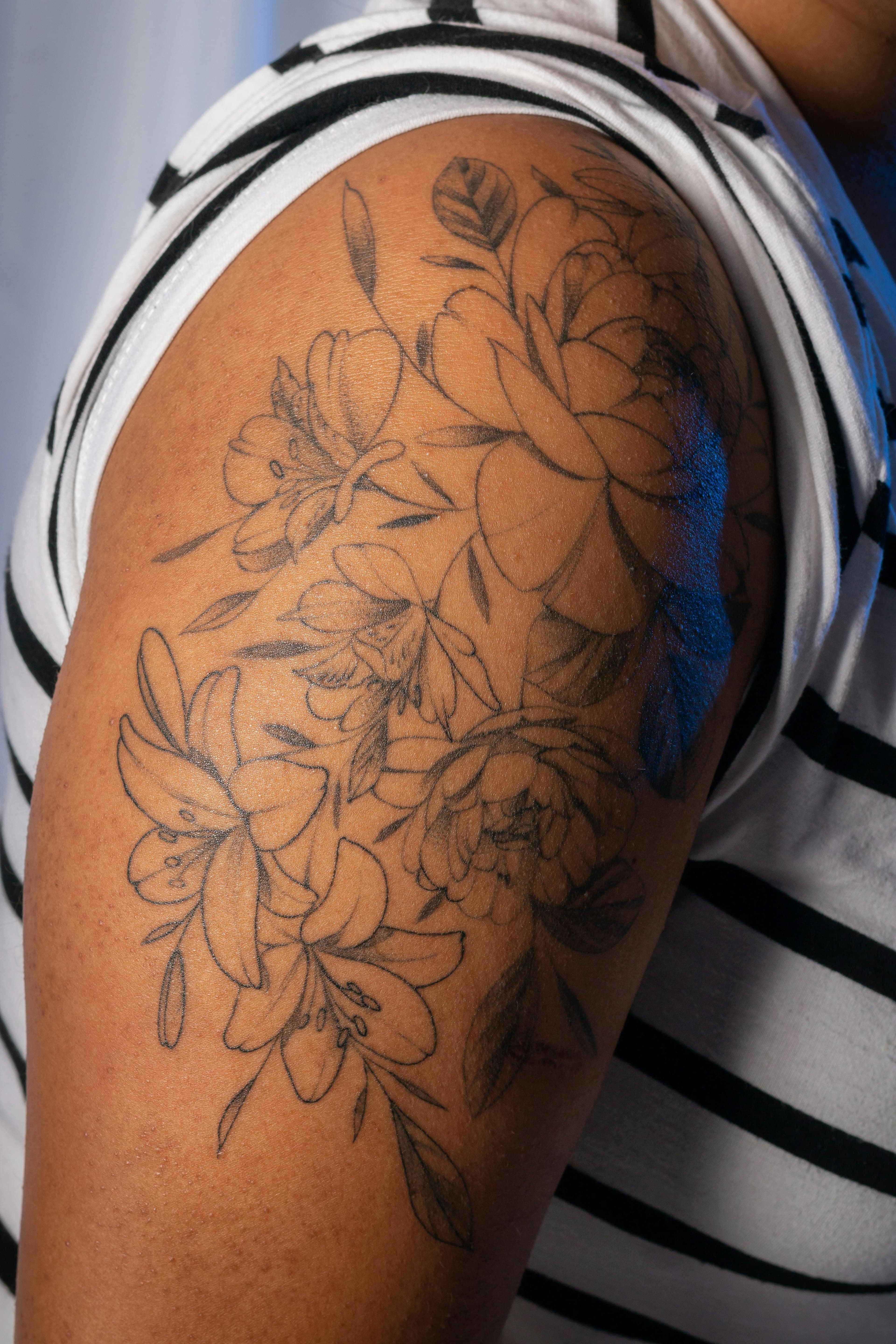
Tattoo removal works on dark skin. What changes is the margin for error. Melanin absorbs laser energy along with the tattoo pigment. So the wrong wavelength, the wrong settings, or an inexperienced provider can cause hyperpigmentation, hypopigmentation, or burns. These can take months to fade. With the right laser, the right settings, and a provider experienced in treating Fitzpatrick IV, V, and VI skin, outcomes are safe and effective. This page explains why melanin raises risk. It covers which wavelengths and technologies are safest. It shows how to tell pigment change apart from true scarring. And it covers what to look for in a provider. Generic clinic pages that say "safe for all skin tones" without specifics are the reason this page exists.
Does Tattoo Removal Work on Dark Skin?
Yes. Tattoo removal is safe and effective on dark skin in the right setup. The laser and settings have to be chosen correctly. The provider has to have real experience treating melanated skin.
The reason this question keeps coming up is simple. Older lasers, some current mid-tier machines, and providers without Fitzpatrick IV-VI experience do cause problems. Those problems are not the same as "tattoo removal does not work on dark skin." They are the result of the wrong tool or hands on the right skin.
Modern picosecond and Q-switched Nd:YAG lasers at the 1064 nm wavelength are well-suited for darker skin. That wavelength bypasses most melanin absorption. Alexandrite lasers (755 nm) and KTP lasers (532 nm) are higher-risk on darker skin. Those wavelengths are absorbed more aggressively by melanin. Knowing which wavelength you are being treated with matters. Ask.
Best Lasers for Dark Skin Tattoo Removal
The safest choice for most dark skin tattoo removal is a Q-switched or picosecond Nd:YAG laser operating at 1064 nm.
Here is why that wavelength matters. Melanin absorbs light strongly in the visible spectrum (the shorter wavelengths like 532 nm and 755 nm) and weakly at longer wavelengths like 1064 nm. A 1064 nm laser can pass through melanin-rich skin and target black tattoo ink with minimal competing absorption. That is the core reason Nd:YAG is the standard for darker skin types.
Picosecond lasers (PicoWay, PicoSure, Enlighten) with a 1064 nm option are a step up from older Q-switched Nd:YAG. They deliver shorter pulse widths. Shorter pulses mean less heat per pulse, which means lower thermal injury risk. That thermal difference is why picosecond is often preferred for Fitzpatrick V and VI skin, even at higher cost.
Lasers and settings to approach carefully:
- Alexandrite lasers (755 nm) are useful for certain ink colors but aggressively absorbed by melanin. Higher risk on darker skin.
- KTP lasers (532 nm) are often used for red and orange ink, but absorbed by melanin at the surface. Risky for dark skin.
- IPL (intense pulsed light) is not a tattoo removal laser at all and should never be used for tattoo removal, regardless of skin tone.
If a provider wants to treat black ink with a 755 nm or 532 nm laser on your skin, ask detailed questions. Ask about their experience with your specific skin tone.
Laser Tattoo Removal on Dark Skin: How It Works
The physical mechanism is the same as with any skin tone. Laser energy fragments tattoo pigment. The particles become small enough for the body to clear through the lymphatic system. What changes on dark skin is how laser energy interacts with melanin on its way to and from the ink.
Key mechanical differences:
- Melanin absorbs laser energy. On darker skin, more energy is absorbed in the epidermis before reaching the ink.
- More absorption in the epidermis means more heat in the top skin layer. More heat raises the risk of pigment change and burn.
- Longer wavelengths (1064 nm) and shorter pulse widths (picosecond) reduce that thermal load.
- Lower fluence (energy per pulse) and more sessions spaced further apart also reduce risk.
A provider experienced with Fitzpatrick V and VI skin usually runs lower fluence. They treat more conservatively. They space sessions further apart (eight to twelve weeks instead of six to eight). And they patch-test before treating the full tattoo. All of those adjustments trade a slower treatment for a safer one.
Hyperpigmentation, Hypopigmentation, and Scarring Risks
These three risks get conflated in clinic marketing. They are different.
Hyperpigmentation is the skin producing extra melanin in response to thermal injury from the laser. It shows up as darker patches where the tattoo was treated. On dark skin it can be noticeable and can take three to twelve months to fade, sometimes longer. It is usually not permanent but can feel like it while waiting.
Hypopigmentation is the skin losing melanin and becoming lighter than the surrounding skin. It is less common than hyperpigmentation but more concerning because it is more often permanent. Hypopigmentation risk rises with aggressive settings, too-close session spacing, or overlapping pulses.
True scarring (textural change, raised or indented skin) is different from pigmentation change. Scarring on dark skin includes the same risks as lighter skin. It also carries a higher baseline risk of keloid and hypertrophic scarring for people with that predisposition. Scarring is rare with experienced providers using appropriate settings. It is more common with aggressive treatment or poor aftercare.
The risk ranking for darker skin, from most common to least common, is typically: hyperpigmentation first, then hypopigmentation, then textural scarring or keloids. All three are reducible with the right laser, the right settings, and a careful provider.
How to Reduce Risk During Tattoo Removal on Dark Skin
Several decisions move the needle on risk.
- Confirm the laser wavelength. Ask the provider directly: "What wavelength is the laser treating my tattoo?" 1064 nm Nd:YAG is standard for dark skin. Anything else needs justification.
- Ask for a patch test. Six to eight weeks before the full session, the provider tests a small area. If pigment change or healing issues appear, you know before the whole tattoo is treated.
- Accept lower fluence. Less energy per pulse means a slower treatment but lower thermal injury risk. A provider who runs high fluence on your skin without discussion is not experienced with Fitzpatrick V-VI.
- Space sessions eight to twelve weeks apart. Dark skin typically needs more healing time between sessions than the standard six to eight weeks. Six-week spacing is too aggressive for many Fitzpatrick V-VI patients.
- Follow aftercare closely. Sun avoidance, consistent sunscreen use, no picking of scabs, and immediate contact with the provider at any sign of blister or infection. Post-inflammatory hyperpigmentation often comes from aftercare failure, not the laser itself.
- Pause if pigment change appears. If you see hyperpigmentation or hypopigmentation after a session, stop and let the skin recover before the next session. Pushing through accelerates the problem.
These are not extra precautions. They are the baseline for safe dark skin tattoo removal.
Tattoo Removal on Dark Skin: What Results Look Like
Real expectations matter more than generic before-and-after galleries.
Fading on dark skin usually takes more sessions than on lighter skin. A tattoo that fully fades in six laser sessions on Fitzpatrick II might need eight to twelve on Fitzpatrick V-VI. This is partly because settings are more conservative and partly because melanin competes for laser energy.
After each session, the treated area may look lighter or darker. It may match the surrounding skin temporarily before settling. This can be confusing. Most pigment change within the first three months after a session is not permanent. It will resolve with time.
Complete removal is possible on dark skin but takes patience. Most providers experienced with darker skin talk about "significant fading" for the first several sessions. Full clearance is a longer-term outcome. A provider who promises complete removal in a fixed session count without examining your tattoo and skin is overpromising.
Look for before-and-after photos specifically on darker skin. A clinic page showing only Fitzpatrick I-III results is not demonstrating relevant experience for your case.
What to Look for in a Provider
The single most important variable for safe dark skin tattoo removal is provider experience. The machine model matters less. A board-certified dermatologist with ten years of Fitzpatrick V-VI work on a mid-range Q-switched Nd:YAG is usually safer than an inexperienced technician with a brand-new picosecond laser.
Specific questions to ask before booking:
- What wavelength will you use to treat my tattoo, and why that one for my skin tone?
- How many patients with Fitzpatrick V or VI skin (darker brown or black skin) have you personally treated?
- Can you show me before-and-after photos of patients with skin similar to mine?
- Do you offer a patch test before the full first session?
- What is your protocol if hyperpigmentation appears after a session?
- How long do you wait between sessions for darker skin tones?
A provider who answers all six confidently and specifically is a fit. A provider who deflects, generalizes, or says "it's safe for all skin tones" without detail is not.
Medical credentials also matter. A dermatology practice or physician-supervised laser clinic is usually safer than a medspa chain with rotating technicians. A specialist with documented training on darker skin is best.
Tattoo Removal Scarring
A full guide to scarring risk during tattoo removal: causes, prevention, and what to do if it happens.
Color Tattoo Removal
Color-by-color guide to wavelength matching, session counts, and what to expect.
Best Tattoo Removal Method
Compare methods across skin type, use case, and cost.
Tattoo Removal Cost
National pricing breakdown by method, size, and provider type.
- Laser Tattoo Removal. How picosecond and Q-switched lasers actually work.
- Tattoo Removal Scarring. Why scarring happens, how to evaluate a provider's track record.
- PicoWay vs Q-Switched. Picosecond vs nanosecond pulse width and clearance evidence.
- Best Tattoo Removal Method. Method landscape: laser, non-laser, saline compared.
- Removery. Largest US laser-removal chain by footprint.
- Tattoo Removal in Houston. Largest tracked market: chains, specialists, dermatology practices.
- Tattoo Removal in Chicago. Tracked providers across the Chicago metro.