Color Tattoo Removal
A color-by-color guide to removing colored tattoos. Learn which ink colors are hardest, which lasers match which pigments, and what complete removal realistically looks like.
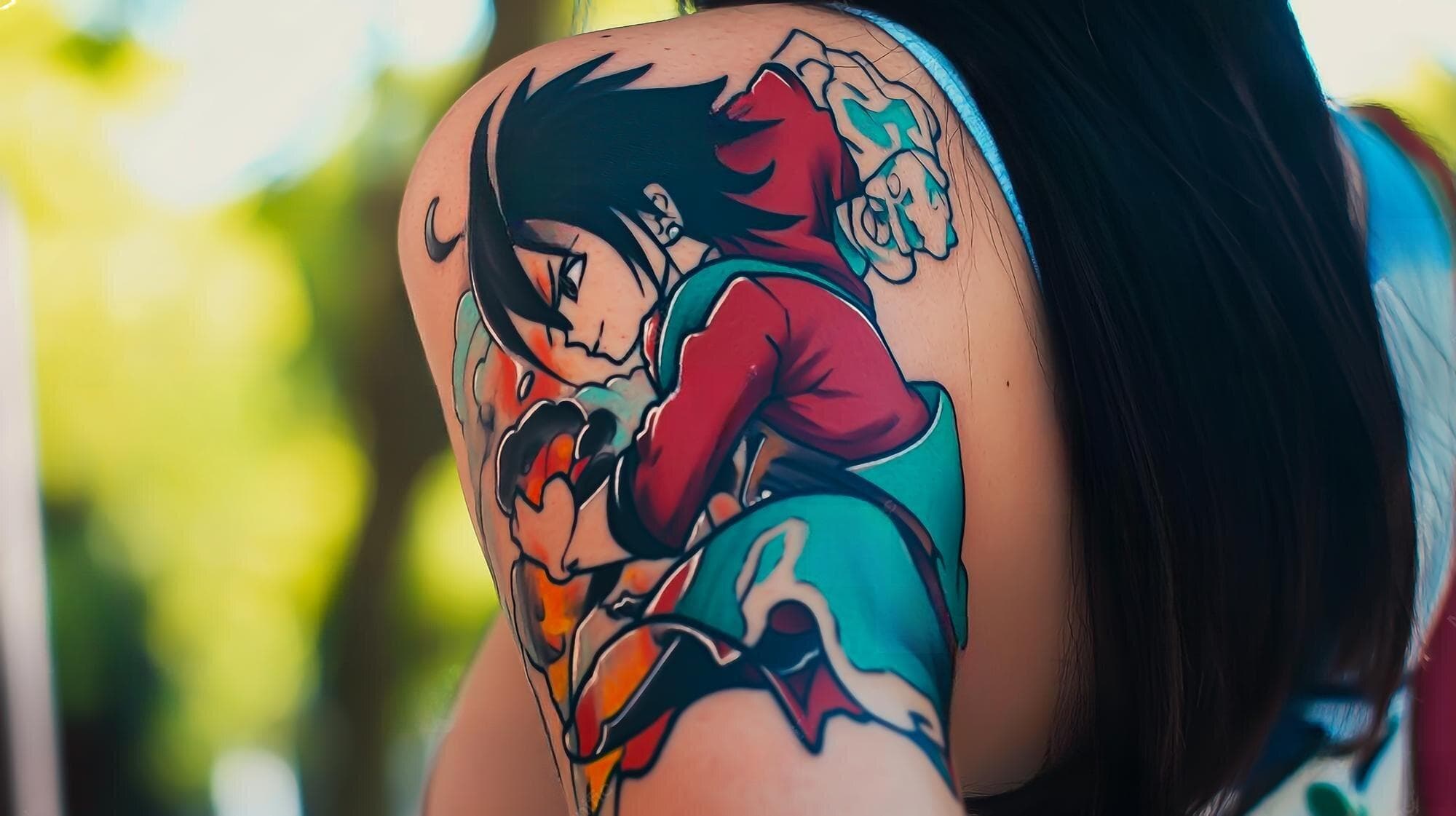
Color tattoos can be removed, but not all colors respond the same way. Black and dark blue clear well. Red and orange usually clear with the right wavelength. Green often takes more sessions than black. Yellow and white are the hardest, and white can darken instead of fading. This page breaks down what to expect by color. It covers which laser wavelengths match which pigments. It explains why multi-color work is harder than single-color work. And it covers when near-complete is the honest end state rather than total clearance.
Are Multi-Colored Tattoos Harder to Remove?
Yes. Multi-color tattoos are harder to remove than single-color work, for two reasons.
First, different colors absorb different laser wavelengths. A 1064 nm Nd:YAG laser targets black well but does little for red or yellow. A 532 nm KTP laser targets red and orange but does little for blue or green. Removing a multi-color tattoo usually means treating with multiple wavelengths over the course of the full treatment plan. A clinic using only one laser wavelength on a full-color piece can achieve fading, but rarely complete clearance.
Second, multi-color tattoos often involve layered pigment. Colors mixed to achieve specific shades can contain ink blends that react unpredictably. Under laser, those blends can shift color before fading, or they can fade at different rates, leaving a patchy appearance mid-treatment.
The practical result is that multi-color removal takes more sessions than black ink removal. Eight to fifteen sessions is a typical range for professional multi-color work, compared to six to ten for black. Rushing the process or treating with a single-wavelength laser does not shorten this timeline. It usually lengthens it.
Which Tattoo Colors Are Hardest to Remove?
Ranked from hardest to easiest, here is how colors generally respond to color tattoo removal.
White. Hardest and riskiest. White pigment often contains titanium dioxide, which can oxidize under laser and turn gray, black, or greenish instantly. Many experienced providers will not treat white ink at all. Others will treat it only after a careful patch test six to eight weeks before the full session. White highlights mixed into colored tattoos often persist after the rest of the tattoo has cleared.
Yellow. Very difficult. Yellow sits at a wavelength range that most laser systems do not target well. A 532 nm KTP wavelength helps, but yellow often leaves trace pigment even after extensive treatment. Yellow is a common color to see in otherwise "completely removed" tattoos, as a faint residual shadow.
Bright green and teal. Hard. Green ink is typically removed with a 755 nm Alexandrite or a 694 nm Ruby laser. Picosecond lasers with multiple wavelengths handle green better than older Q-switched systems. Even so, green can leave residual pigment after ten or more sessions in some cases.
Light blue and turquoise. Moderate. Light blues can respond reasonably well to Alexandrite (755 nm) and certain picosecond wavelengths, but lighter pigments take more sessions than saturated dark blue.
Red and orange. Moderate. Red and orange both respond to 532 nm KTP laser energy. Red usually clears within a normal session range. Orange takes somewhat longer. Neither is as easy as black, but both are usually fully removable.
Dark blue and navy. Easier. Dark blue absorbs 1064 nm Nd:YAG reasonably well and clears close to the rate of black ink.
Black. Easiest. Black pigment absorbs nearly every laser wavelength and is the benchmark for tattoo removal. Most professional black tattoos clear in six to ten sessions. Color tattoo removal sessions on black ink tend to fall in the same range.
The ranking above is a rough guide, not a rule. Ink manufacturer, saturation, tattoo age, and skin type all shift color-specific outcomes.
Which Tattoo Colors Are Easiest to Remove?
Black is the easiest, followed by dark blue and dark green. These darker pigments absorb laser energy across the widest range of wavelengths, so they respond to more laser types and clear with fewer sessions.
Older tattoos of any color usually clear faster than fresh work, because ink naturally fades over years. A five-year-old red tattoo often clears in fewer sessions than a six-month-old red tattoo of the same size and saturation.
Amateur tattoos are typically single-ink and shallower than professional work. They often clear in three to six sessions regardless of original color. The same pigment-specific logic still applies.
Best Lasers for Color Tattoo Removal
No single laser wavelength covers every tattoo color. Color tattoo removal often requires a multi-wavelength laser system. It can also require access to multiple laser types over the course of treatment.
Here is how wavelengths match to colors in color tattoo removal:
- 1064 nm Nd:YAG targets black, dark blue, and dark green.
- 532 nm KTP (frequency-doubled Nd:YAG) targets red, orange, and some yellows.
- 755 nm Alexandrite targets green and teal, and some light blues.
- 694 nm Ruby targets blue and green. Less common than Alexandrite but effective.
- 785 nm picosecond targets blue and green, available on some Enlighten and PicoWay systems.
Picosecond lasers (PicoSure, PicoWay, Enlighten) typically offer better color results than older Q-switched Nd:YAG systems, for two reasons. First, shorter pulse widths deliver less thermal energy per pulse, which means more efficient fragmentation of pigment particles. Second, many picosecond platforms include multiple wavelengths in one machine. This lets a provider match wavelength to ink color across a multi-color tattoo in the same session.
For any color tattoo, ask your provider which wavelengths they will use, and which wavelengths are available on their equipment. If the clinic has only one wavelength (commonly 1064 nm Nd:YAG), color work will be slower or incomplete. Some colors may need referral to a different clinic.
Can Tattoo Removal Lasers Remove All Colors?
Most colors, yes. Some, no.
Modern multi-wavelength picosecond systems can treat nearly every tattoo color except white and some yellows. Some clinics have access to multiple lasers, for example a Q-switched Nd:YAG plus an Alexandrite plus a picosecond. These clinics can handle full-color work effectively.
Colors that remain difficult regardless of laser:
- White ink may not remove cleanly with any laser. Titanium dioxide oxidation risk makes most providers skip it entirely.
- Yellow often leaves trace pigment even with the right wavelength.
- Some proprietary color blends from specific ink manufacturers have unpredictable responses.
If a provider tells you every color on your tattoo will clear completely with their specific laser, ask which wavelengths the machine offers. If they hesitate or cannot answer, the claim is not grounded.
Color Tattoo Removal vs Black Ink Removal
Color and black ink tattoos are genuinely different removal projects.
Black tattoos respond to almost every laser wavelength. Clearance rates are high, session counts are predictable, and complete removal is realistic for most cases. Black removal is where the tattoo removal industry has the most experience, the strongest data, and the clearest outcomes.
Color tattoos require wavelength matching to specific pigments. Clearance rates depend heavily on which colors are present and which laser wavelengths the provider has. Session counts are harder to predict. Complete clearance is realistic for some colors and difficult for others.
The practical implications:
- Expect more sessions for color work than for comparable-sized black work.
- Budget more time (total treatment can run 12-24 months).
- Budget more cost (more sessions at similar per-session pricing).
- Accept that some colors may leave trace pigment.
- Choose a provider with multi-wavelength laser access or access to multiple laser machines.
If a clinic treats color tattoos at the same per-session price as black tattoos using a single 1064 nm Nd:YAG laser, that clinic is either underpricing or underdelivering. Real color removal requires more equipment and more technique.
How Many Sessions Does Color Tattoo Removal Take?
Typical session ranges by tattoo type:
- Single-color red or orange: six to ten sessions
- Single-color green: eight to twelve sessions
- Single-color blue: six to twelve sessions depending on shade
- Multi-color professional work: eight to fifteen sessions
- Heavily saturated or layered multi-color: fifteen or more sessions
- Amateur color tattoos: often three to six sessions
Color tattoo removal uses the same session spacing as black ink work. Six to eight weeks for lighter skin. Eight to twelve weeks for darker skin. Total timeline for complete color tattoo removal is typically twelve months to two years, sometimes longer for complex pieces.
The Kirby-Desai scale assigns points based on six factors: Fitzpatrick skin type, tattoo location, ink color, amount of ink, scarring, and layering. It gives a more accurate session estimate than a clinic's default package count. A provider using Kirby-Desai is doing a methodical assessment. A provider promising a fixed session count without assessment is overselling.
Complete vs Partial Color Tattoo Removal
Partial removal is often the right end goal for color work.
Complete removal means no visible trace at normal viewing distance. For many color tattoos, especially multi-color pieces with yellow or white, complete removal is genuinely difficult and may not be achievable. Fifteen sessions in, if residual yellow is still present, more sessions often produce diminishing returns.
Partial removal or significant fading is a legitimate outcome. A tattoo that is 80-90% faded is dramatically less visible than the original and opens the door to effective cover-up work if desired. For cover-ups specifically, complete removal is usually not even the goal. Three to five sessions of fading often creates a clean enough base for a new tattoo to hide the original.
Deciding which outcome you want before session one makes the treatment plan clearer. If complete clearance is the goal, budget for more sessions and accept that some colors may still leave trace. If fading for a cover-up is the goal, the treatment is shorter, cheaper, and more predictable.
Complete Removal
What complete removal realistically looks like, and which cases achieve it.
Dark Skin Tattoo Removal
Safe laser choices, wavelengths, and providers for Fitzpatrick IV through VI.
Best Tattoo Removal Method
Compare laser, TEPR, and saline across effectiveness, skin type, and use case.
Tattoo Removal Scarring
Scarring risk by method, skin type, and provider. Prevention and treatment.
- Laser Tattoo Removal. How picosecond and Q-switched lasers actually work.
- Tattoo Removal Side Effects. Pigment change, infection risk, blistering: what is normal.
- PicoWay vs Q-Switched. Picosecond vs nanosecond pulse width and clearance evidence.
- Best Tattoo Removal Method. Method landscape: laser, non-laser, saline compared.
- Removery. Largest US laser-removal chain by footprint.
- MEDermis Laser Clinic. Tattoo-removal-only specialist in Austin and San Antonio.
- Tattoo Removal in Austin. Provider landscape across the Austin metro.
- Tattoo Removal in Houston. Largest tracked market: chains, specialists, dermatology practices.